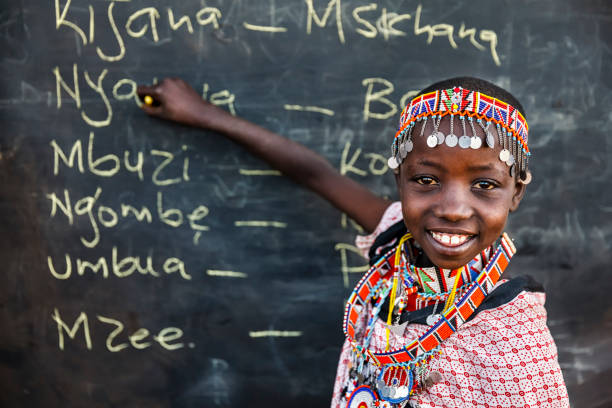
Swahili is the national language of Kenya and is widely understood and spoken by many Kenyans for everyday communication. The new constitution recognizes Swahili as an official language alongside English.Obviously, this new situation will greatly contribute to the realization of the dream of Swahili scholars and even African politicians to make Swahili an official language throughout Africa. Swahili is currently the official language of the East African Community and has been proposed as one of the AU languages. Additionally, Swahili is the lingua franca throughout East and even Central Africa. Therefore, being fluent in the language can lead to many benefits, including employment. Promoting the writing of books, magazines, news, advertisements, newspapers, blogs, etc. to generate income. Facilitating the teaching of National and Diverse Units, Translation and Hospitality in International Units is the result of learning Swahili comprehensively. Swahili is used in political meetings and is the language of Parliament, so it is important to know these two particularly important political parties to get involved in East Africa. It is clear that trade is important for the economic development of any country. Therefore, it is expected that the use of Swahili in international affairs will be prioritized as a means of promoting Swahili. This situation can stimulate business, especially between countries where Swahili is used for communication. Swahili is used for intimate communication in society.Therefore, community interests, such as agriculture, education, etc. Solved and best done using Swahili. Communication of science and technology in the official languages. Developments in this area are important for any country in the world. Knowledge in this sector is a major driver of social and especially economic well-being. The use of Swahili in scientific and technological activities requires the design and standardization of terminology covering various related issues. It is thanks to these efforts that the language is used in the field, knowing that the concepts involved are foreign and have been referenced in English for many years. Communication technologies and websites are largely in English. This is where Swahili must be strengthened so that it takes an important place in this type of communication. Due to its new status, Swahili should begin to be used to teach other subjects at all levels of education in the country.Preparation will involve the preparation of new educational programs at all levels. In addition, textbooks needed to teach subjects at all levels of education must be written in Swahili. University teacher training should be conducted in Swahili to prepare actors to teach in educational institutions in the country. Education officials at different levels will need to learn Swahili in order to prepare them for the responsibility of directing education programs in their districts. This is expected to be evident in higher education institutions such as universities, which will need to develop strong strategies that will enable them to improve communication in Swahili among experts from various disciplines.This means that Swahili was developed together with English to meet the teaching needs of various subjects. Many religions use Swahili to reach a wide audience. Others use interpreters in their sermons. These reasons and many more clearly show that Swahili is our golden language of pride. The Swahili department offers a variety of training designed to meet the needs of modern society by imparting different types of knowledge and skills to students.
Swahili is the national language of Kenya and is widely understood and spoken by many Kenyans for everyday communication. The new constitution recognizes Swahili as an official language alongside English.Obviously, this new situation will greatly contribu